Introduction
Companies spend billions of dollars on firewalls, encryption, and biometric scanners. They build digital fortresses that are mathematically impossible to crack.
And then, a hacker bypasses it all with a single phone call.
This is the reality of Social Engineering. It is the art of manipulating people into giving up confidential information. Unlike traditional hacking, which targets software vulnerabilities, social engineering targets cognitive vulnerabilities—bugs in the human operating system.
In 2025, with the rise of AI voice cloning and deepfakes, “hacking the human” has become easier and more dangerous than ever. This guide explores the dark psychology behind these attacks and, more importantly, how to patch your own mind against them.
1. The Psychology of the Con
Hackers don’t need to be master coders; they just need to be good amateur psychologists. They know that the human brain operates on two systems:
-
System 1: Fast, emotional, automatic.
-
System 2: Slow, logical, calculating.
A social engineer’s goal is to hijack System 1 so you act before System 2 can wake up. They do this by triggering four specific emotions:
A. Fear (The “IRS” Scam)
-
The Trigger: “You are going to jail if you don’t pay now.”
-
The Reaction: Panic overrides logic. You pay to stop the fear.
B. Urgency (The “CEO” Scam)
-
The Trigger: “I need this wire transfer in 15 minutes or we lose the deal!”
-
The Reaction: You rush to help, skipping standard verification steps.
C. Curiosity (The “USB” Drop)
-
The Trigger: A hacker leaves a USB drive labeled “Executive Salaries” in the company parking lot.
-
The Reaction: 90% of people will plug it in to see what’s on it. (And boom, the malware installs).
D. Greed (The “Crypto” Scam)
-
The Trigger: “Turn $100 into $1,000 in one day.”
-
The Reaction: The promise of easy reward blinds you to the obvious risk.
2. The New Weapon: AI-Powered Vishing
“Phishing” is an email scam. “Vishing” is Voice Phishing.
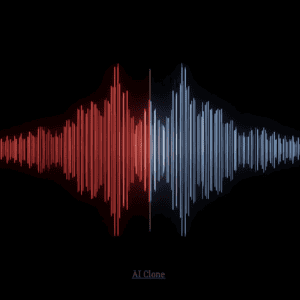
In the past, you could spot a scam call because it was a robocall or a stranger. In 2025, hackers use Generative AI to clone voices.
The Scenario: You get a call from your boss. It sounds exactly like her. She asks you to urgently send a password because she’s locked out of a meeting.
-
The Reality: The hacker took a 30-second clip of your boss speaking from a YouTube video or podcast, fed it into an AI, and is now typing text that the AI speaks in her voice in real-time.
The Defense: Establish a “Safe Word” with your family and key colleagues. If “Dad” calls asking for money because he’s in jail, ask for the safe word. If the AI doesn’t know it, hang up.
3. Pretexting: The Long Game
Not all attacks are quick. Pretexting is when a hacker creates a fictional scenario (a pretext) and builds trust over time.
The “IT Support” Pretext:
-
Day 1: Hacker calls the front desk: “Hi, I’m Alex from IT Support. We’re running updates this week, just letting you know.” (Truth: Alex doesn’t exist).
-
Day 3: Hacker calls again: “Hey, it’s Alex again. Did those updates slow down your PC?”
-
Day 5: Hacker calls: “Okay, to fix the slowdown, I need you to download this patch.”
Because “Alex” has called before, he feels familiar. The victim trusts him and downloads the malware.
4. Business Email Compromise (BEC)
This is the most financially damaging crime in the world, costing businesses billions.
It isn’t about stealing passwords; it’s about stealing payments.
-
The Hack: Attackers compromise a vendor’s email account. They watch the conversations for weeks.
-
The Strike: When a legitimate invoice is due, they reply from the vendor’s real email: “Hey, our bank details changed. Please send the payment to this new account number instead.”
-
The Result: The company sends $50,000 to the hacker, thinking they paid the vendor.
The Defense: Never authorize a payment change via email alone. Always call the vendor on a trusted phone number (not the one in the email signature) to verify.
5. How to Build a “Human Firewall”
You cannot patch a human brain, but you can install “software updates” in the form of habits.
-
The “Scepticism” Pause: If an email triggers an emotion (Fear, Excitement, Urgency), stop. Take your hand off the mouse. Count to 10. That pause lets your logical brain catch up.
-
Verify Out-of-Band: If you get a request via Email, verify via Slack. If you get a request via Phone, verify via Email. Never verify using the same channel the request came from.
-
Inspect the URL: Hover over links before clicking. Does it say
paypal-secure-login.com? That is fake. Real PayPal ispaypal.com.
Conclusion
We like to think we are too smart to be tricked. But social engineers don’t target stupidity; they target humanity. They exploit our desire to be helpful, our fear of authority, and our busy schedules.
The most secure computer in the world is useless if the person typing on it gives away the password. In the age of AI, skepticism is a survival skill. Stay paranoid.