
Introduction
The standard advice for curing phone addiction is simple: “Just delete the apps.”
Delete Instagram. Delete TikTok. Delete Email.
But for most of us living in 2025, that is terrible advice. You need WhatsApp to talk to your family. You need LinkedIn for your career. You need Maps to get home. Your smartphone is a tool, not just a toy. Throwing it away isn’t an option.
“recent tech addiction experiments”
The goal isn’t abstinence; it is friction.
The reason you doomscroll for two hours isn’t that you are weak; it’s that the apps are designed to be frictionless. To win your time back, you don’t need to delete the software. You just need to make it slightly more annoying to use.
Here are five proven strategies to regain control of your attention without going back to a Nokia brick phone.
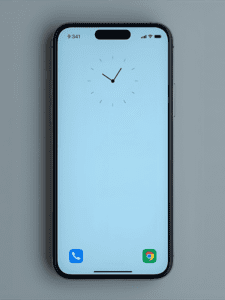
1. The “One Swipe” Rule (Buried Treasure)
Muscle memory is your enemy. You unlock your phone, and your thumb automatically taps the Instagram icon before your brain even realizes what happened.
The Fix: Never keep “Infinity Pool” apps (social media, news, games) on your Home Screen.
-
Move them into a folder.
-
Name the folder something boring like “Utilities” or “Drain.”
-
Move that folder to the second or third page of your phone.
Why it works: Now, to open TikTok, you have to: Unlock -> Swipe -> Swipe -> Open Folder -> Tap App. That extra 2 seconds of effort forces your brain to make a conscious choice: “Do I actually want to do this?”
2. Go Grayscale (The Nuclear Option)
We discussed this briefly in our Algorithmic Trap article, but it deserves its own section because it is the single most effective hack in existence.
Your phone screen is designed like a slot machine: bright red badges, saturated blue buttons, and colorful gradients. These colors trigger dopamine in your primate brain.
“research on persuasive technology” or “studies on grayscale effectiveness“
The Fix: Turn your phone Black and White.
-
iPhone: Settings > Accessibility > Display & Text Size > Color Filters > Grayscale.
-
Android: Settings > Digital Wellbeing > Bedtime Mode > Grayscale.
Why it works: Instagram without color is incredibly boring. You will check it, realize it looks like a newspaper, and close it after 30 seconds instead of 30 minutes.
3. The “VIP Only” Notification Policy
Your phone should not ring unless a human being is trying to speak to you specifically.
Most notifications are machines talking to you: “Someone liked your photo,” “Breaking News,” “20% off Sale.” These are distractions, not urgent communications.
“Center for Humane Technology’s guidelines“
The Fix: Go to Settings and turn off ALL notifications, then turn back on only these three:
-
Phone Calls.
-
Direct Messages (WhatsApp/iMessage).
-
Calendar Reminders.
If an app doesn’t involve a real person waiting for a reply, it does not deserve to buzz in your pocket.
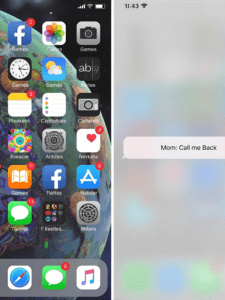
4. The “Phone Foyer” Method
The most dangerous time for screen time is right before bed and right after waking up. This happens because we charge our phones on our nightstands.
The Fix: Buy a cheap charging station and put it in your foyer (entryway) or kitchen. When you walk in the door at 6 PM, plug your phone in there.
Why it works: If you want to check your phone, you have to physically stand up and walk to the kitchen. You can still hear it ring if it’s urgent, but you won’t mindlessly scroll while watching Netflix on the couch.
5. Use “One Sec” (The Interceptor)
If you have zero willpower, outsource it to an app.
There is a brilliant app called One Sec (available on iOS and Android).
-
How it works: When you tap Twitter, the app intercepts you. It forces you to take a deep breath for 3 seconds and asks: “Do you really want to open Twitter?”
-
The Result: 50% of the time, you realize you didn’t actually want to open it; you were just bored. You click “I don’t want to,” and it closes the app for you.
Conclusion: You Are the Pilot
Smartphones are wonderful tools. They contain all human knowledge and connect us to our loved ones. The problem isn’t the device; it’s the default settings.
By adding a little bit of friction—moving icons, removing color, and silencing the noise—you transform your phone from a master that commands your attention into a tool that serves your life.